
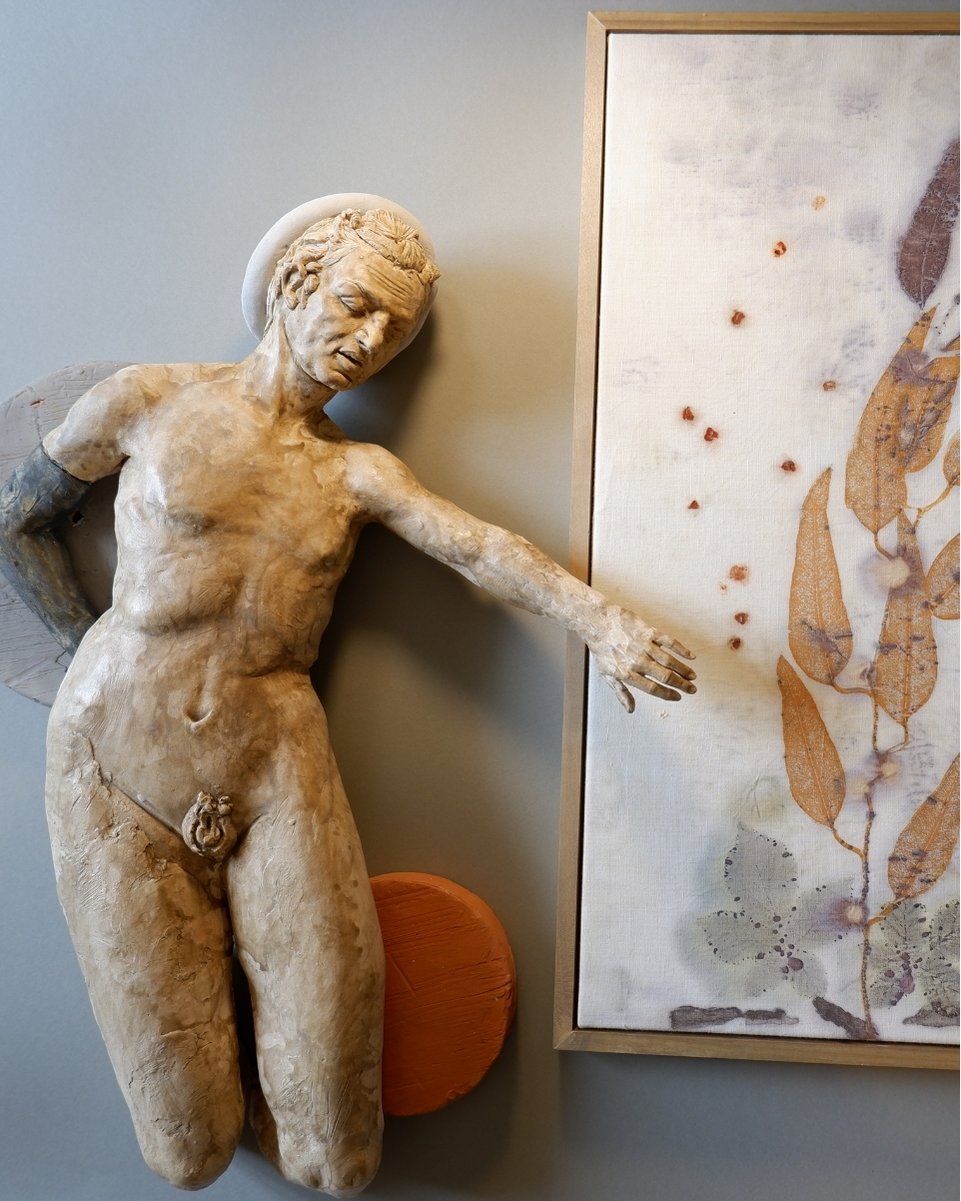
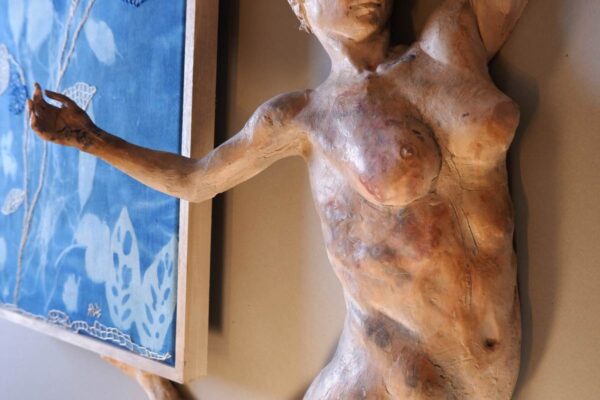
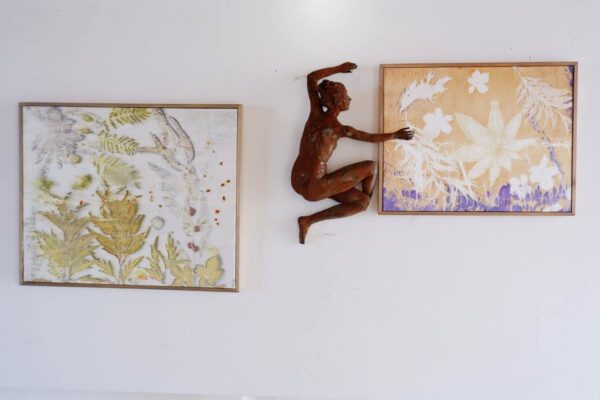
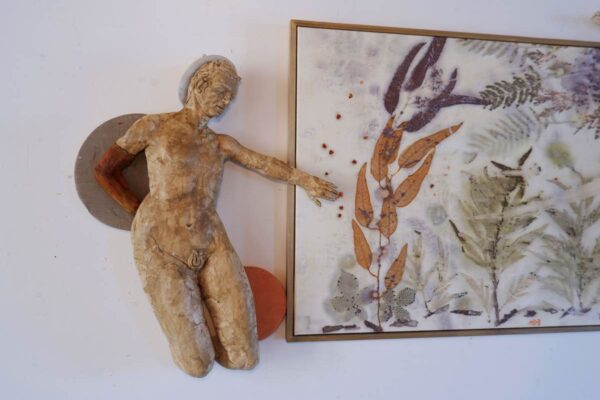
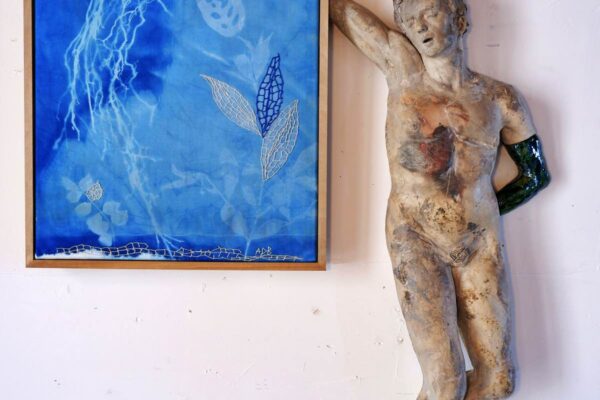
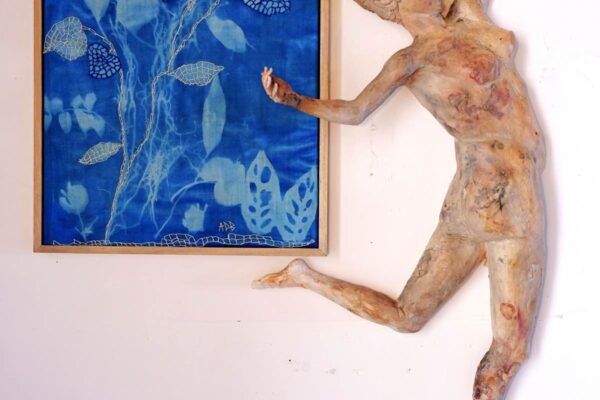
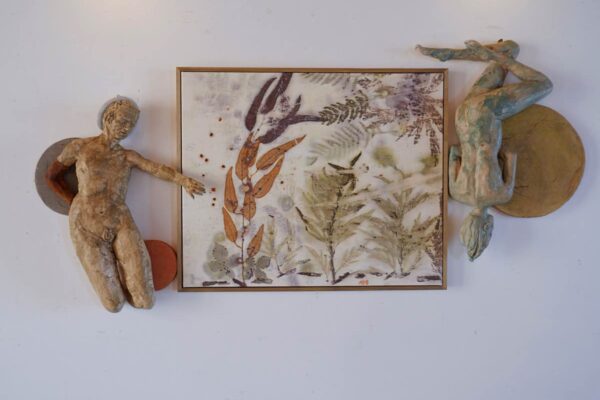
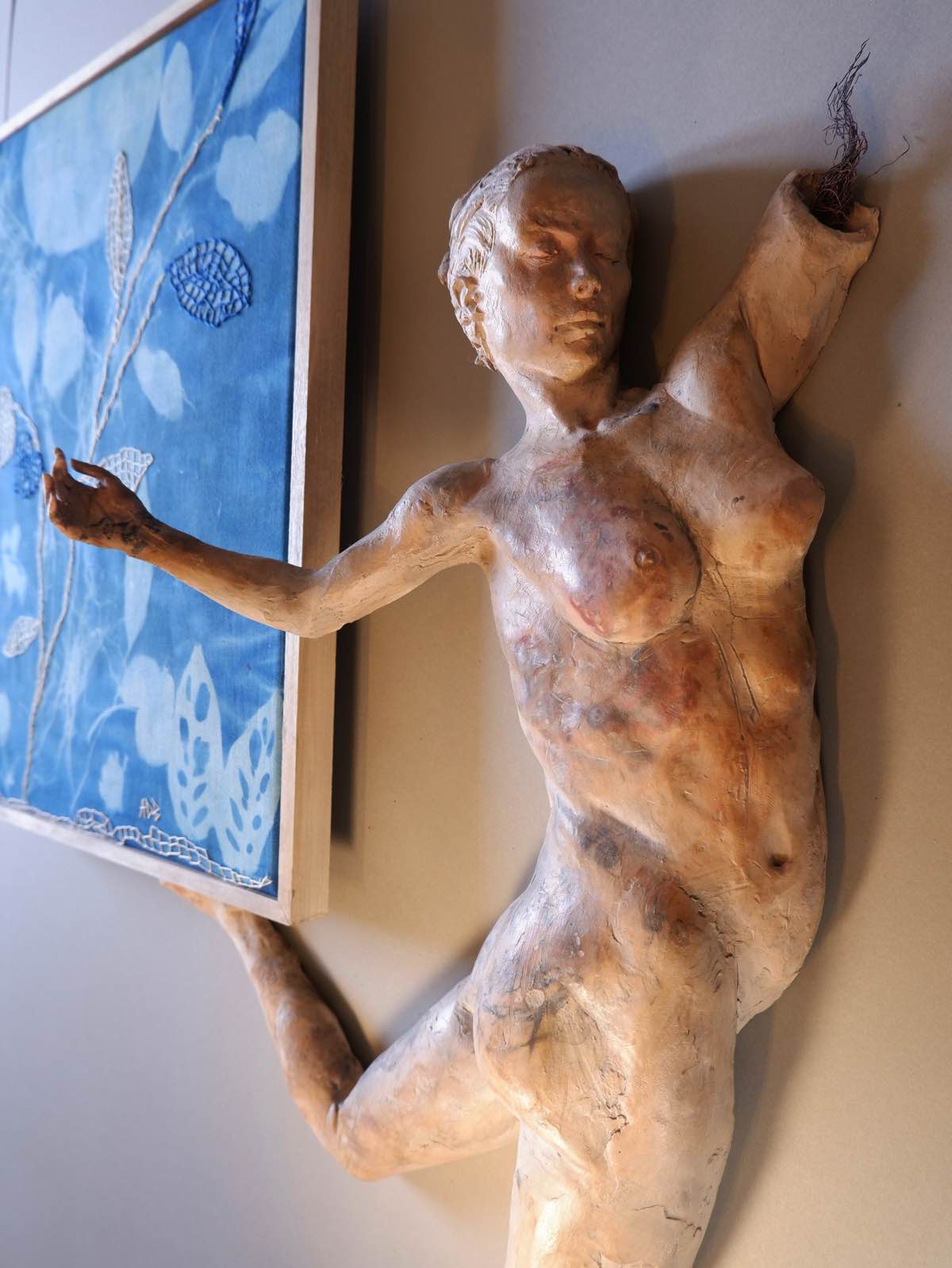
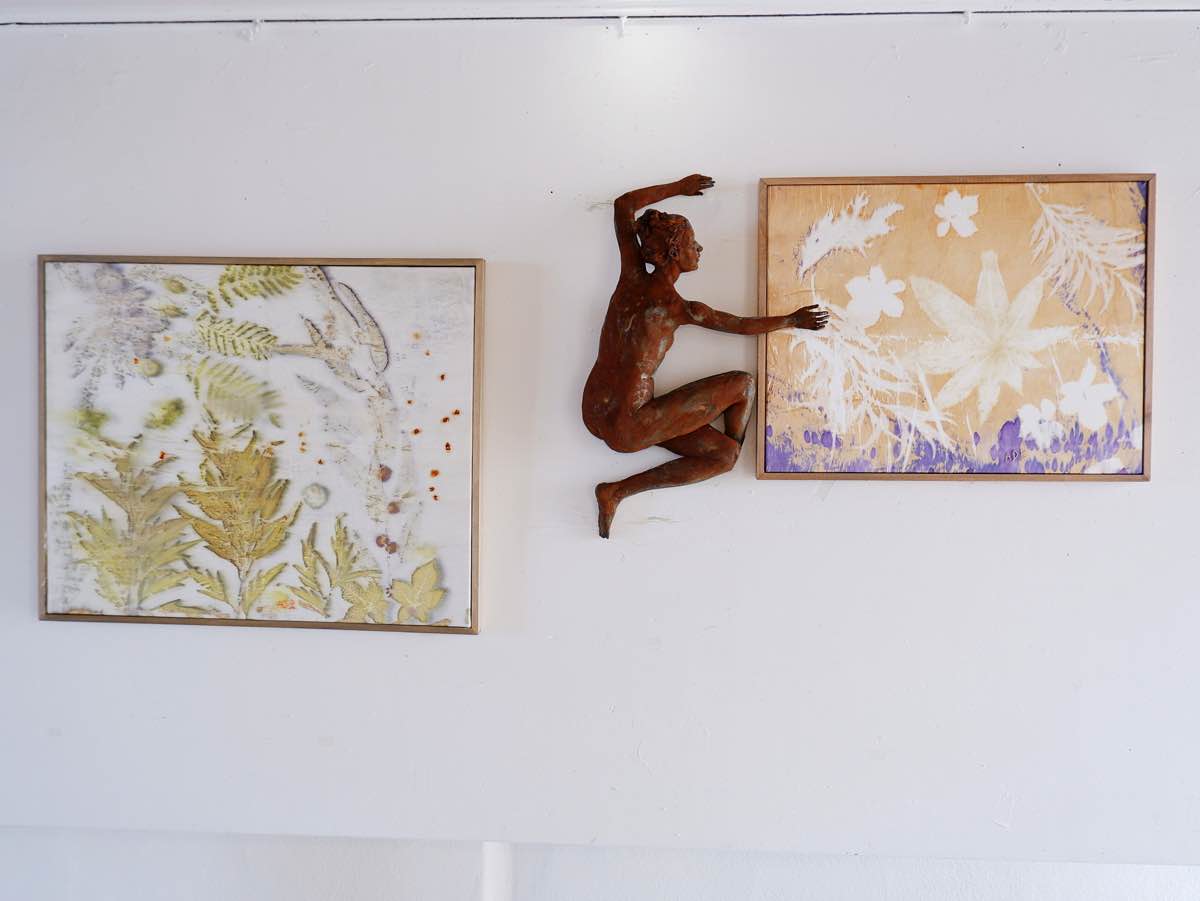
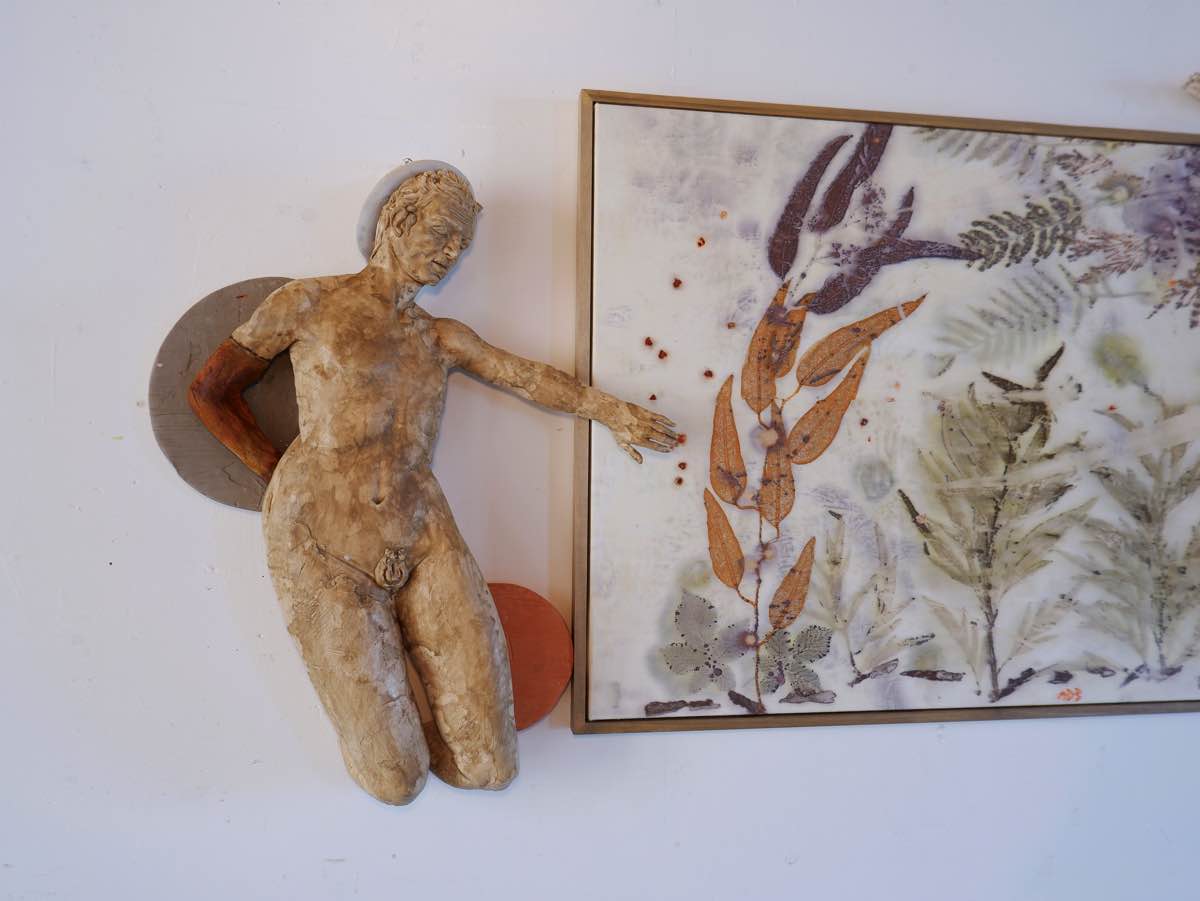
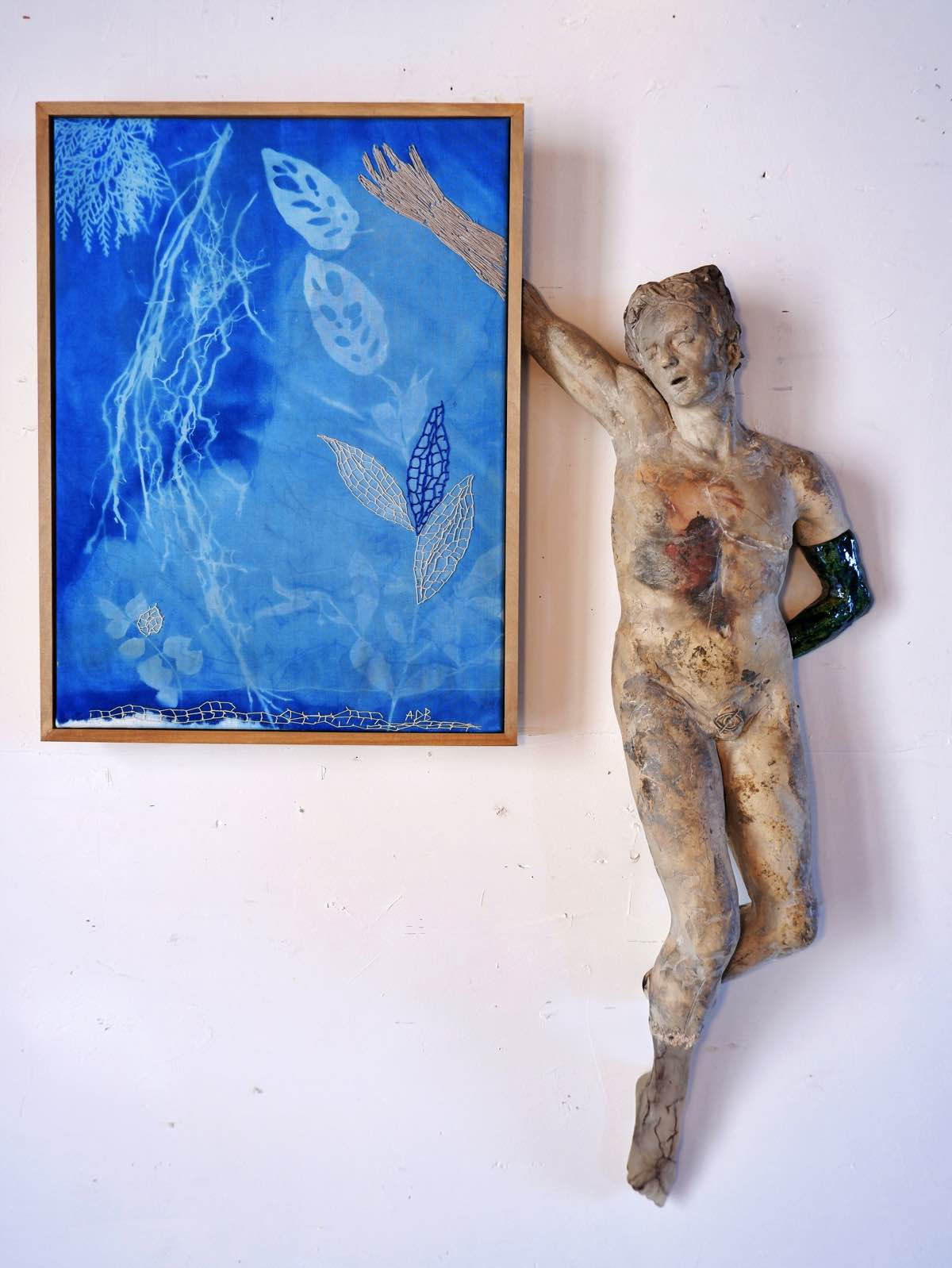
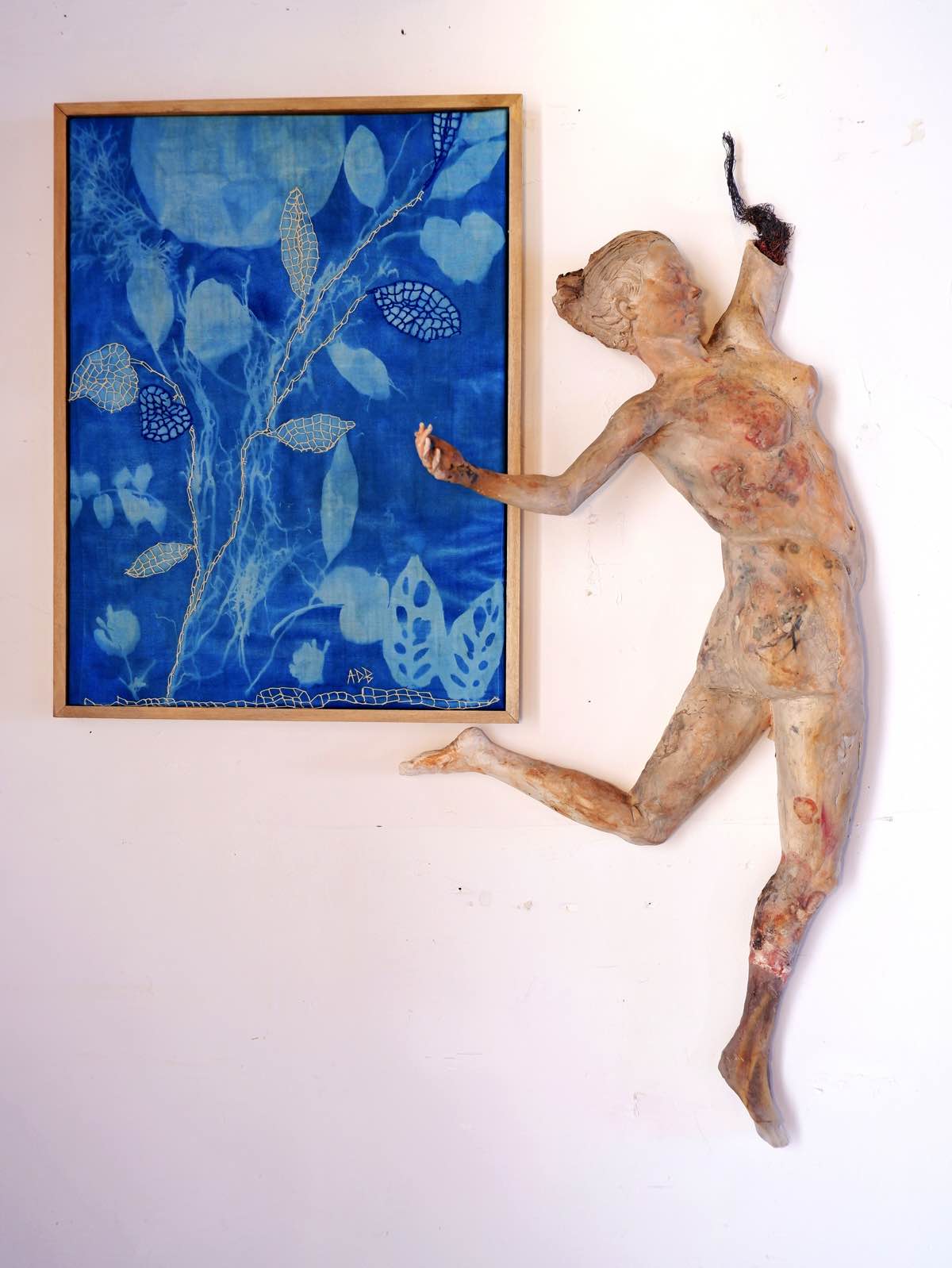
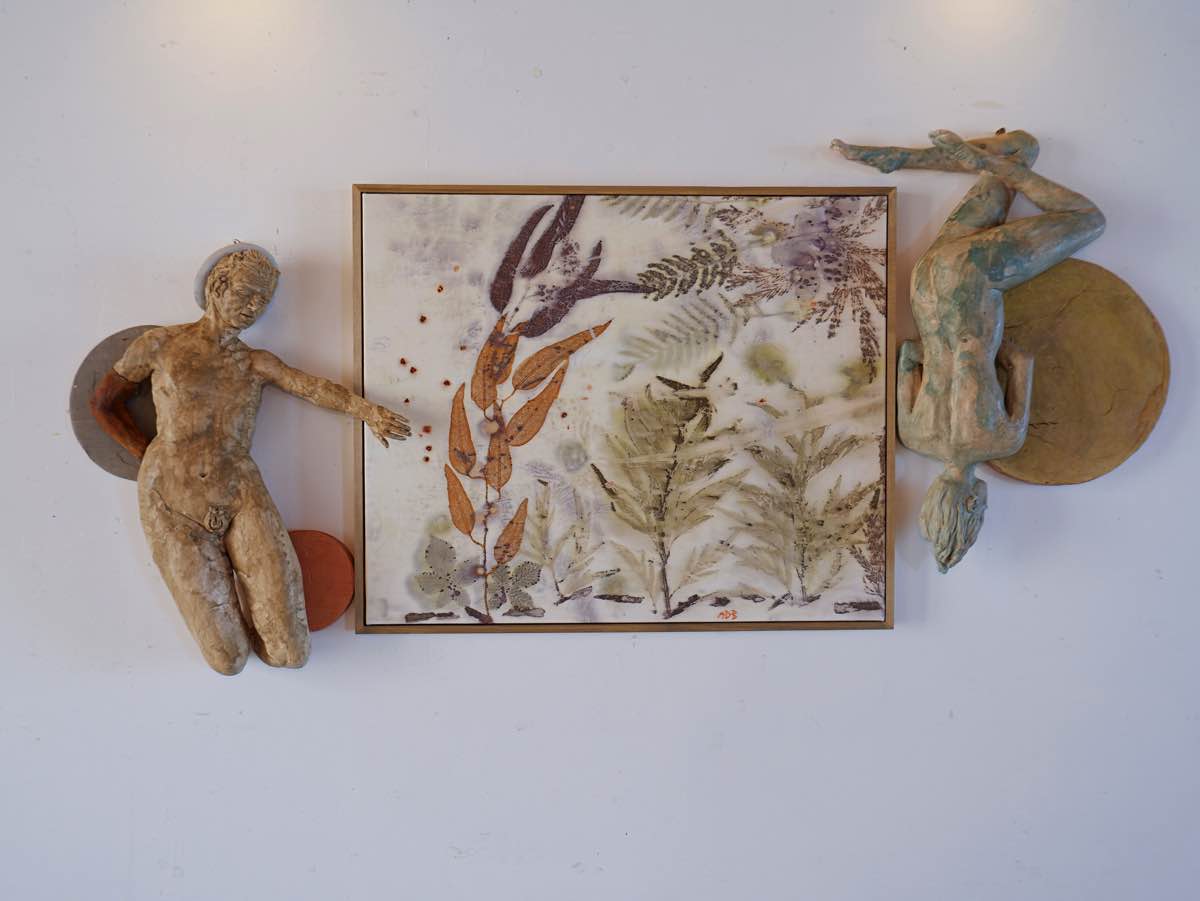
Alberto Criscione più che uno scultore potrebbe definirsi un’alchimista, perché al modellato dell’argilla – che spesso è dinamico e materico, seppur figurativo- si aggiunge una complessa interazione con l’elemento fuoco; il quale da vita ad effetti particolari, non facilmente etichettabili, ma che appartengono alla sfera della ceramica sperimentale.
Una delle tecniche da lui più utilizzate è una variante del Saggar firing, che consiste nel chiudere i pezzi all’interno di un box pieno di segatura, fili di rame e materiali organici, che bruciando creano effetti di colore e di affumicatura che si fissano sulla scultura.
Si ottiene così un colore casuale e privo di spessore, al contrario di ciò che avverrebbe utilizzando medium diversi come gli smalti o le patine a freddo.
Da alcuni anni, sta spostando la sua attenzione verso materiali eco-compatibili, come le resine con alte percentuali di biomassa e materie prime seconde miste ad adesivi di origine organica.
Anche la scelta delle argille è particolare, perché ormai da anni Alberto, si avvale di grès e semi-refrattari – spesso da lui ricreati – che gli permettono di creare sculture molto plastiche ma al tempo stesso coriacee. Ideali per resistere agli shock termici a cui vengono sottoposte.
Alberto Criscione could be defined as an alchemist rather than a sculptor, because his work it develop on a complex interaction with fire which proceeds from a dynamic and textured modeling
which generate particular effects, not easily label, but which belong to the sphere of experimental ceramics.
One of the techniques he uses is a variant of Saggar firing, which consists in closing pieces inside a box full of sawdust, copper wires and organic materials, which when burned create color and smoky effects that fix on sculpture.
This results in a random color with no thickness, unlike what would happen using different mediums such as glazes or cold patinas.
For some years, he has been shifting its attention towards eco-compatible materials, such as resins with high percentages of biomass and secondary raw materials mixed with adhesives of organic origin.
The choice of clays is also particular, because for years Alberto has been using stoneware and semi-refractories clay – often recreated by him – which allow him to create very plastic but at the same time leathery sculptures. Ideal for resisting the thermal shocks to which they are subjected.
Il processo creativo di Angela Di Blasi ruota intorno al cucito che entra in relazione con le piante, attraverso le tecniche dell’ecoprint e della cianotipia.
Le impronte che gli elementi naturali lasciano sulle stoffe, vengono riprese poi con il ricamo, imitando le ragnatele o i motivi utilizzati per creare gli acchiappasogni.
Ecoprint
è l’antica tecnica di colorazione con le foglie, che Angela ha personalizzato, realizzando così quadri e arazzi. Ad una prima fase di mordenzatura dei tessuti e di composizione dei motivi decorativi, segue una accurata pressione delle foglie sulle stoffe e una lunga bollitura che genera poi i colori.
È dal lasciar fare alla natura che si crea la meraviglia.
Cianotipia
In questo caso le impronte delle foglie sono in negativo, perché il processo del cianotipo, prevede la stesura del colore sul supporto desiderato e, successivamente l’applicazione degli elementi compositivi dell’opera.
La luce del sole fissa il colore blu sulla tela, mentre le foglie creano la tintura riserva, che poi verrà lavata via con l’acqua, lasciando così un’impronta indelebile.
Angela Di Blasi’s creative process revolves around sewing which enters into relationship with plants, through ecoprint and cyanotype techniques.
The imprints that natural elements leave on the fabrics are then taken up with embroidery, imitating the cobwebs or motifs used to create dreamcatchers.
Ecoprint
it is the ancient technique of coloring with leaves, which Angela has personalized, thus creating paintings and tapestries.
An initial phase of mordanting the fabrics and composing the decorative motifs is followed by careful pressure of the leaves on the fabrics and a long boiling which then generates the colours.
It is by letting nature follow its flow that wonder happens.
Cyanotype
In this case the imprints of the leaves are negative, because the cyanotype process involves the application of the color on the desired support and, subsequently, the application of the compositional elements of the work.
The sunlight fixes the blue color on the canvas, while the leaves create the tie-dye motive, which will then be washed away with water, thus leaving an indelible imprint.